The digital product passport timeline for fashion
Fashion brands selling in the EU will need Digital Product Passports on virtually every garment by approximately mid-2028. This date isn't locked in legislation yet, but it represents the strongest consensus across EU institutions, law firms, and industry sources. The legal foundation, the Ecodesign for Sustainable Products Regulation (ESPR), has been in force since July 2024. What's still pending is the textile-specific delegated act that defines exactly what data a DPP must contain and when compliance becomes mandatory.
Below is the full timeline, what's confirmed, what's estimated, and when to start preparing.
In short: The ESPR is law. The textile delegated act is expected between late 2026 and Q2 2027, with an 18-month compliance window after that. That puts mandatory DPPs for new textile products around mid-2028. The exact data requirements won't be final until the delegated act is published, but the direction is clear enough to start running a pilot now.
How we got here#
The ESPR was first proposed on 30 March 2022 alongside the EU Strategy for Sustainable and Circular Textiles, which explicitly named Digital Product Passports as a core mechanism for textile transparency. After two years of legislative negotiation, the regulation entered into force on 18 July 2024 as Regulation (EU) 2024/1781. In April 2025, the Commission adopted its 2025-2030 Working Plan, officially designating textiles as a top-priority product group for DPP requirements.
It's worth noting that while the 2025 "Omnibus" simplification wave scaled back corporate sustainability reporting rules significantly, the DPP framework itself was left untouched. Product-level requirements are moving forward as planned.
Timeline#
Here's an overview of the key dates that matter for fashion brands, both confirmed and expected.
The next set of dates is where it gets concrete. By July 2026, the central DPP registry must be operational and the ban on destruction of unsold textiles takes effect for large enterprises. In September 2026, the Empowering Consumers Directive kicks in, prohibiting generic green claims without verifiable data. The textile-specific delegated act is expected between late 2026 and Q2 2027. And in December 2027, the Forced Labour Regulation becomes fully applicable, making supply chain traceability not just a DPP requirement but a market access requirement.
The most commonly cited date for mandatory DPPs on new textile products is around mid-2028, based on 18 months after the expected delegated act adoption.
What happens after 2028#
The DPP framework doesn't stop at the initial rollout. By July 2030, the ban on destruction of unsold textiles extends to medium-sized enterprises. The EU Textile Strategy has set 2030 as its target year for all textile products on the EU market to be long-lived, recyclable, and made substantially from recycled fibres. According to a European Parliament Research Service study, progressively expanded DPP data requirements and broader stakeholder access are expected through the early 2030s, with the goal of fully circular product passports feeding end-of-life data back to designers and recyclers.
These timelines may shift as the regulatory process progresses. But the trajectory is clear, and the obligations will only get broader over time.
When should you start preparing#
Once the delegated act is adopted, brands get 18 months before DPPs become mandatory. If the act lands in early 2027, that puts mandatory compliance around mid-2028. The delegated act will also define the exact data fields, so full implementation realistically starts once it's published.
But production lead times are worth factoring in. Fashion brands typically work 6 to 10 months ahead of a product's market entry. Labels and trims, including the care label where the DPP's QR code will be affixed, are finalized during pre-production and need to be ready before bulk manufacturing begins. Nine months into the 18-month window is roughly when the first products will need DPP-ready labels. That lines up with standard lead times, but it doesn't leave much room for getting your data infrastructure in order at the same time.
The practical answer: use the time before the delegated act to run a pilot. Generate passports for a handful of products, test your data quality, and identify the gaps in supplier information. This doesn't need to be a months-long project. It's about making sure that when the delegated act drops and the requirements are final, you can move to full implementation without starting from scratch.
Late 2026: Run a pilot. Pick a small set of products, map the data you already have (material compositions, supplier information, certifications), and generate test passports. Use this to surface gaps, particularly around supply chain traceability and lifecycle data, that will take coordination with suppliers to fill.
When the delegated act is published (expected late 2026 to Q2 2027): Move from pilot to production. The exact data fields will be defined, and you'll have 18 months. Integrate your DPP system with your existing tools, start generating QR codes for upcoming collections, and include them in your label specifications for factory production.
From that point onward: Every new product entering production should have a DPP-ready label. As final technical standards and guidance are published, you adjust accordingly.
Getting started#
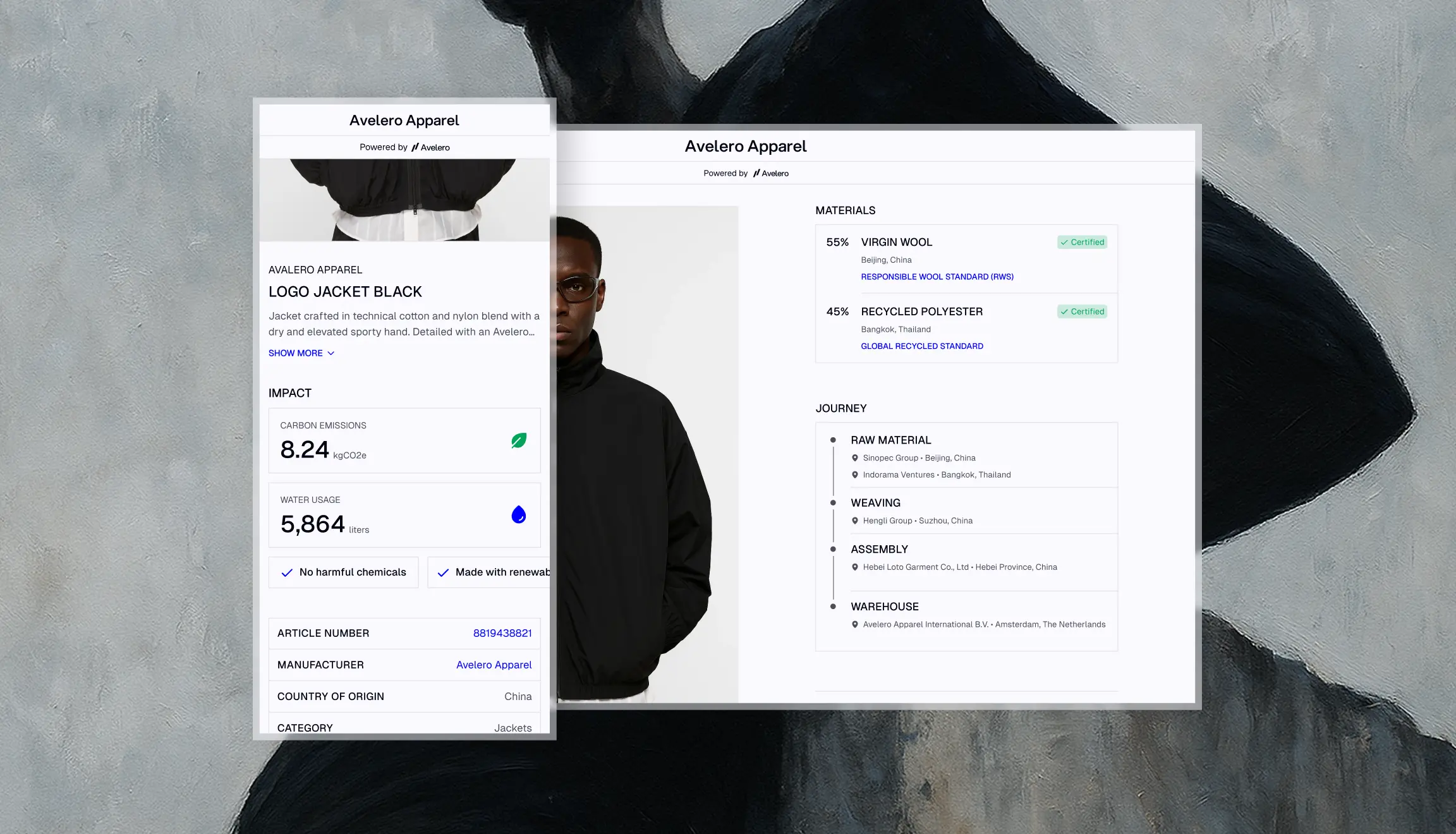
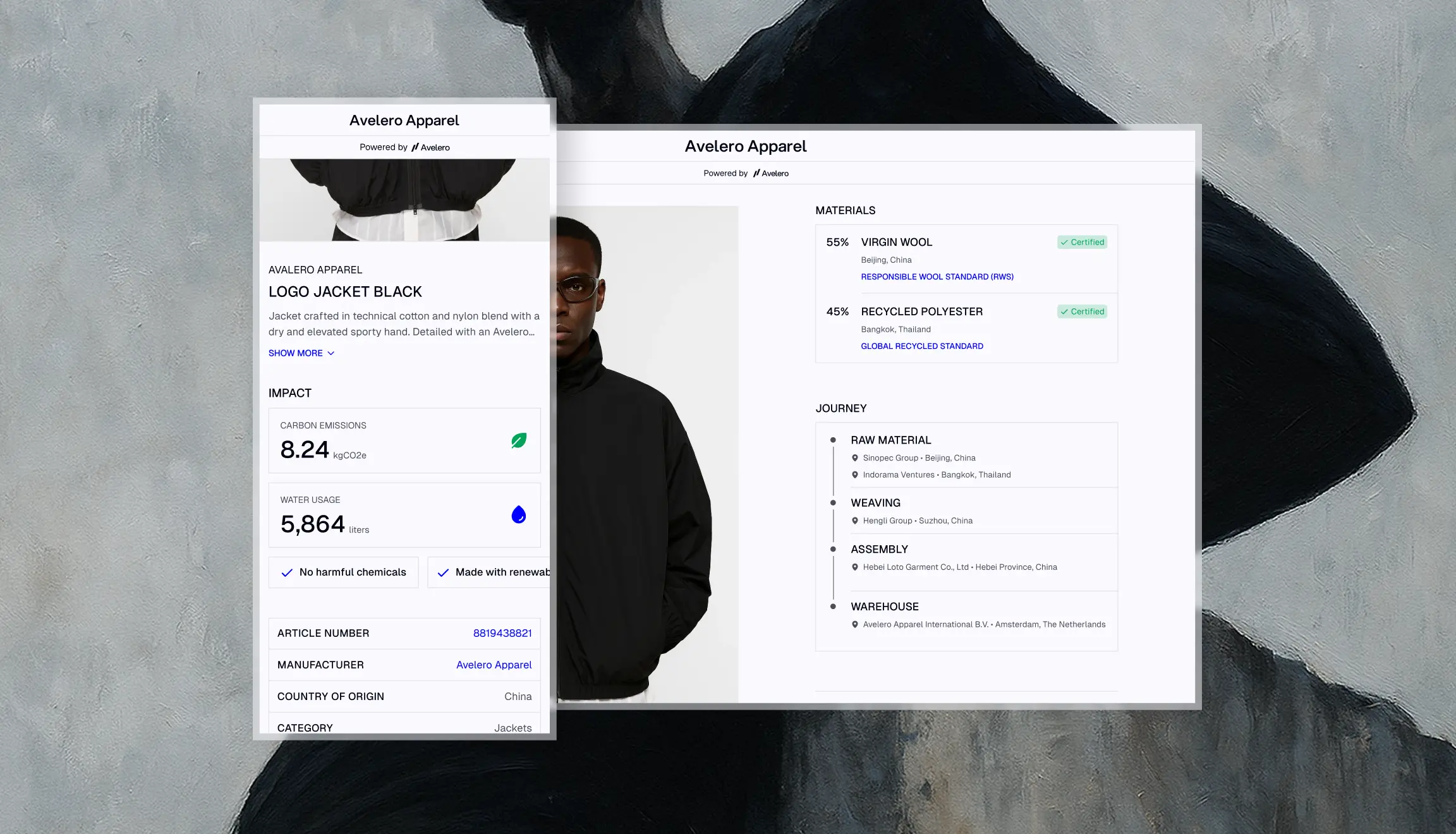
If you're not sure where to begin on the data side, we've written a detailed breakdown of the expected data requirements for the textile DPP that covers everything from material composition to lifecycle environmental impacts.
We built Avelero to make implementation fast. You can connect your existing product data, customize the passport to match your brand, and start generating QR codes in days rather than months. We've also built an LCA prediction engine into the platform so you can calculate lifecycle environmental impacts automatically, which is one of the harder data requirements to solve on your own.
If you're looking to run a pilot before the delegated act lands, or if you want to move straight to implementation, we'd like to talk.