Product passports that engage
Avelero is built for fashion brands that want to launch EU-compliant product passports in days, not months. Connect your article data, estimate product footprints, and design on-brand experiences that customers actually want to explore.
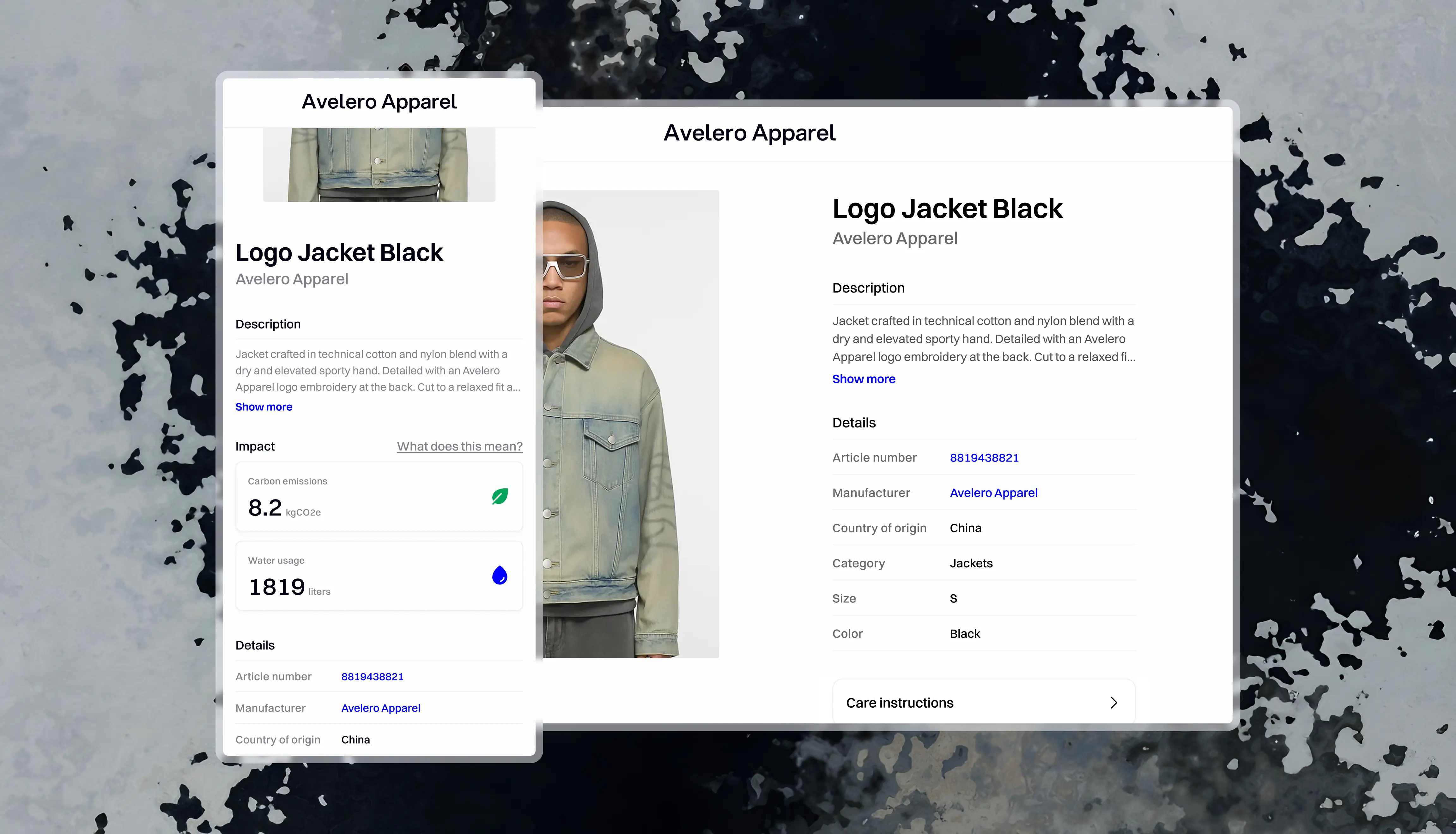
A new customer touchpoint
Learn more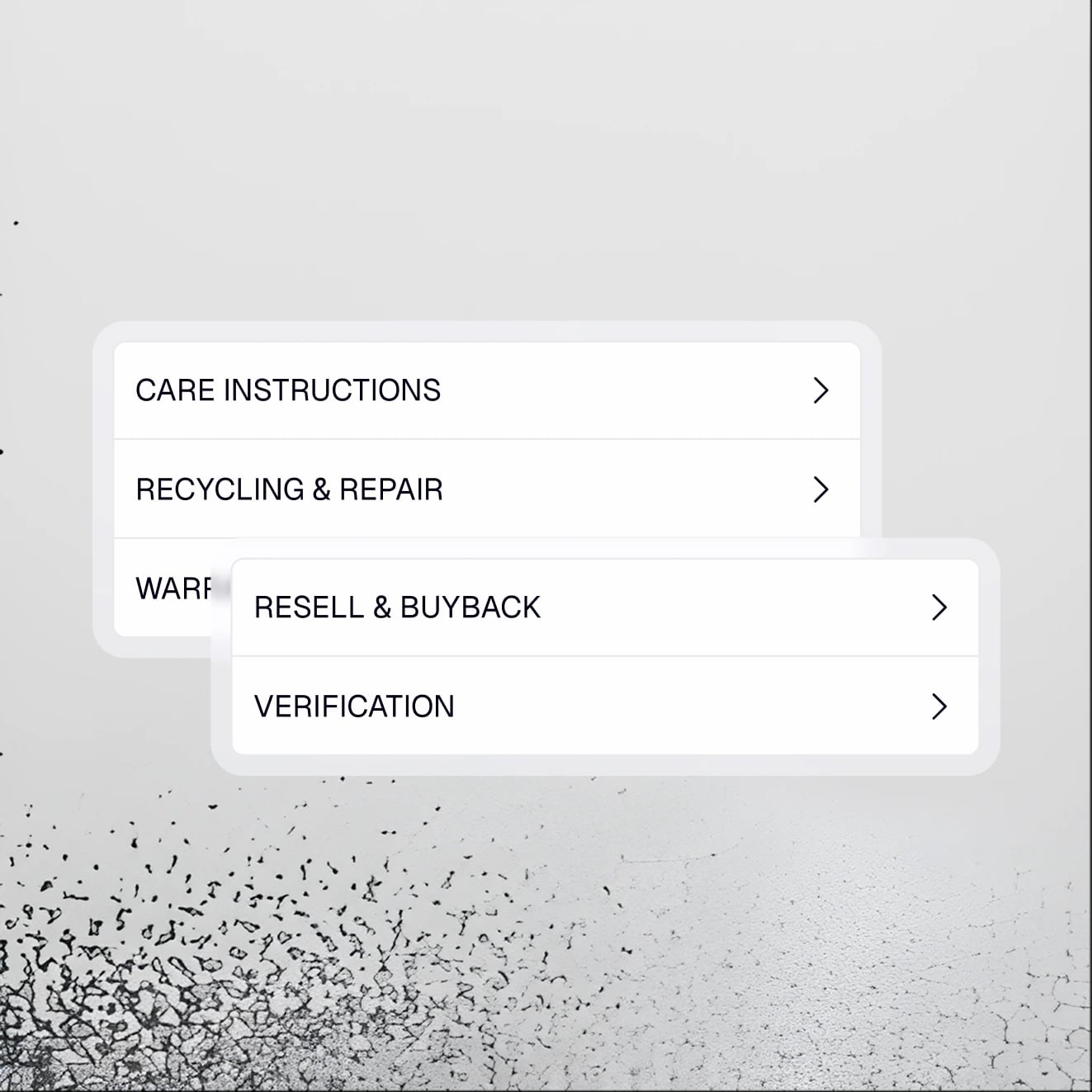
A reason to visit your passport
Add care guides, repair services, and resell opportunities. Give customers a reason to return long after the purchase.
Re-engage with your brand
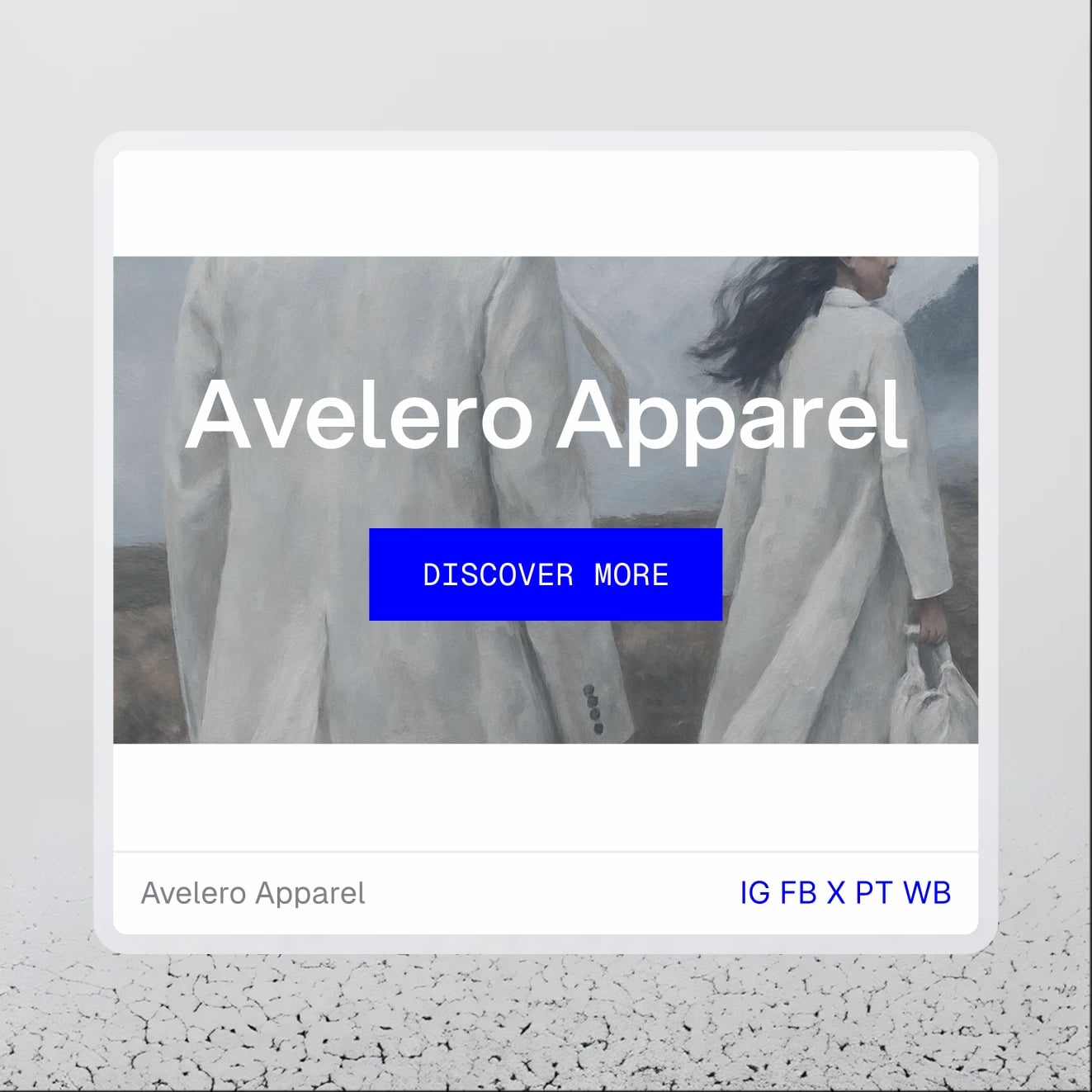
Tell your story, share your impact, and build loyalty. Product passports are an extension of your brand.

An opportunity to convert
Drive traffic back to your store with links to related products, newsletter signups, or campaign banners.
Estimate your product footprint
with our LCA engine
Estimate your product footprint
with our LCA engine
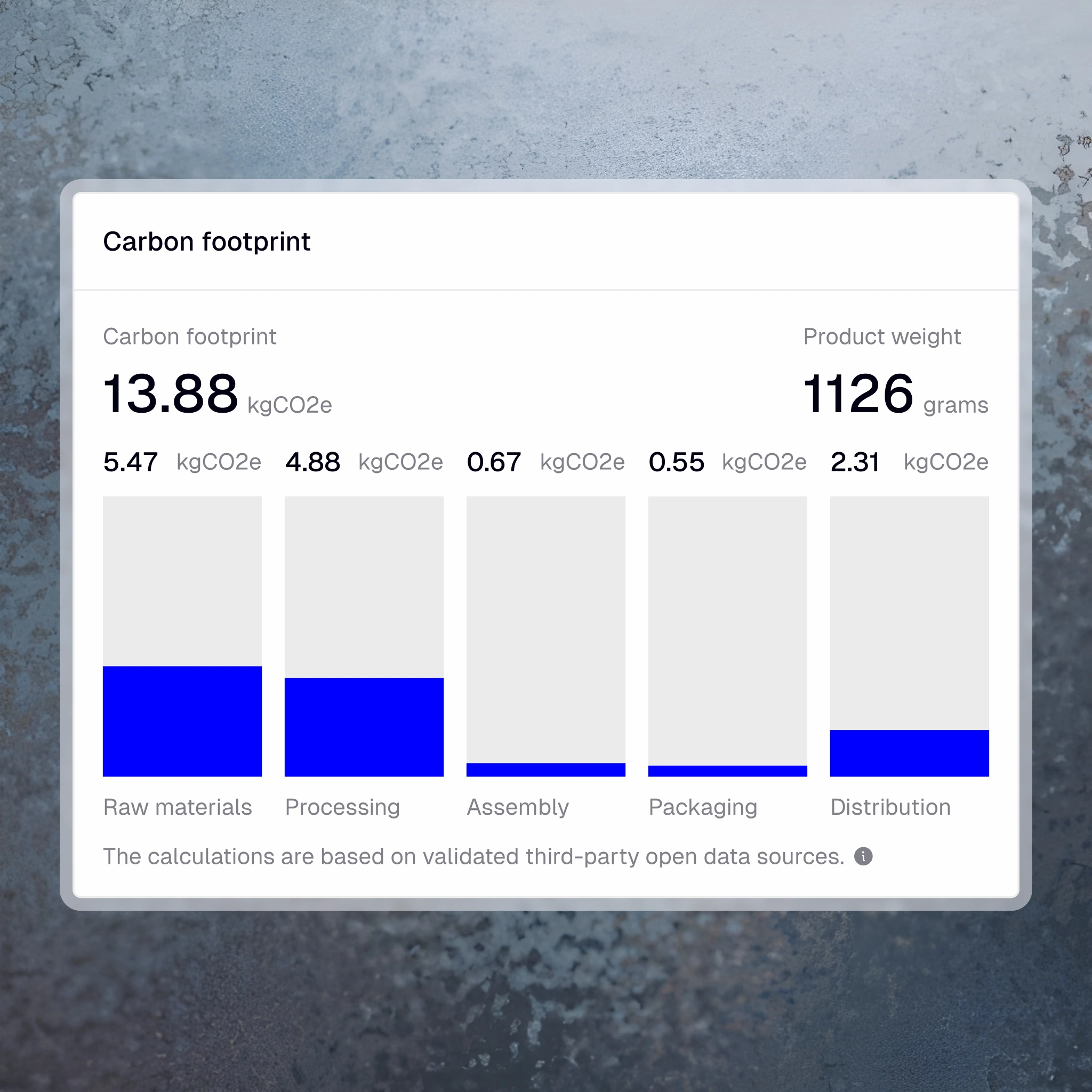
Our LCA engine predicts carbon and water impact from as little as a product category and basic material data. Trained on validated open data sources and ISO 14040-44 methodology, it gives you footprint estimates ready to include in your digital product passports.
Design passports
that feel like your brand
Design passports
that feel like your brand
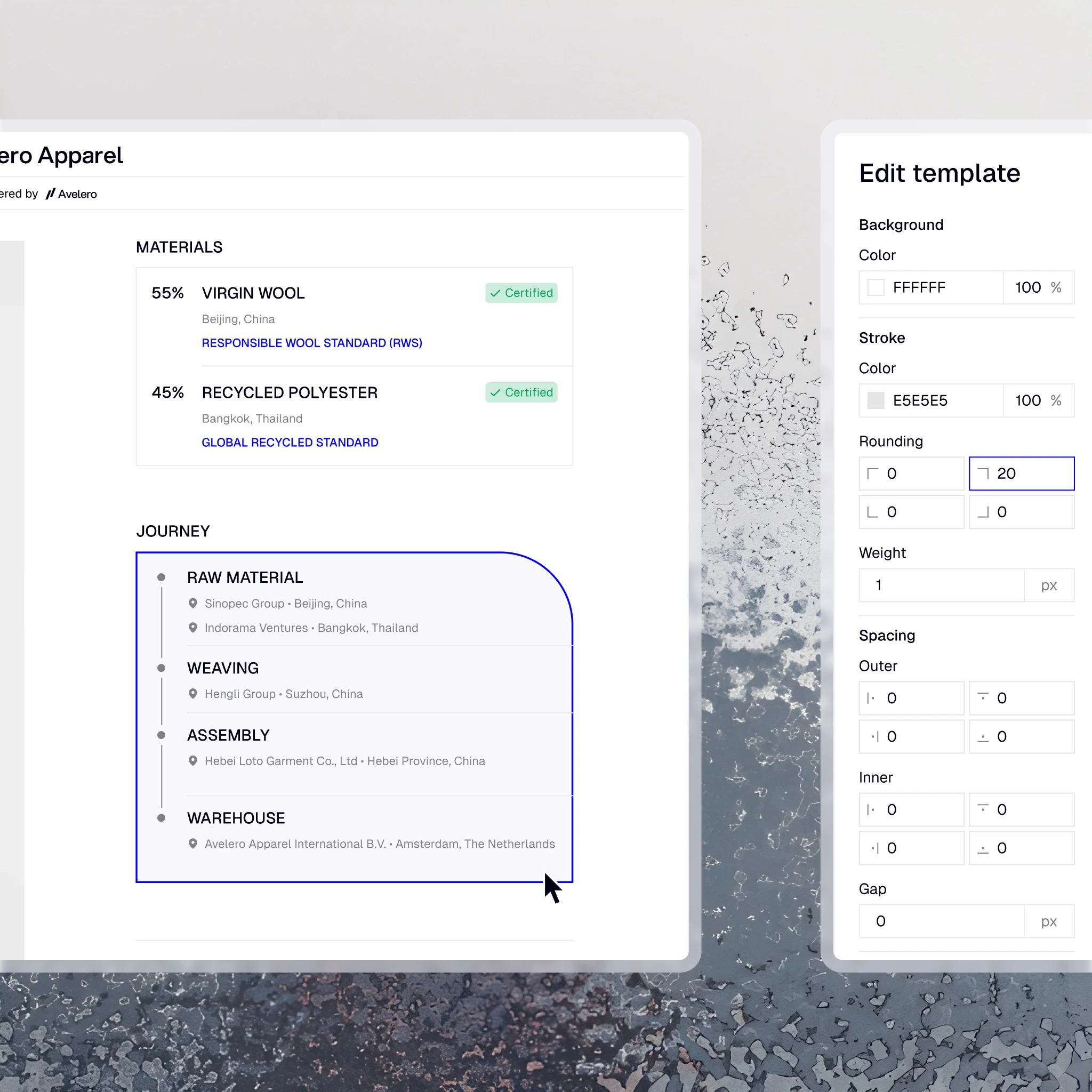
Build passports from modular sections that you can rearrange, style, and brand. Set your own typography, colors, and layout rules, then reuse them across your entire catalog. Every passport reflects your identity, not ours.
Learn moreStay compliant & secure
with Avelero
ISO 14040-44
Footprint model trained in accordance with ISO 14040-44 lifecycle assessment standards.
GDPR
Product and consumer data processed in full compliance with EU privacy law.
ESPR
Meets EU Eco-Design for Sustainable Product Regulations.
AWL
Meets France's Anti-Waste and Circular Economy Law.
Questions & Answers
A digital product passport (DPP) is a product-level digital record containing information about a product's materials, origin, environmental impact, and end-of-life options. Consumers access it by scanning a QR code on the product label or packaging.
Avelero is built for fashion and apparel brands that want to launch EU-compliant digital product passports. Whether you're an emerging label or an enterprise brand, you can connect your product data, estimate footprints, and design on-brand passport experiences.
The EU's Ecodesign for Sustainable Products Regulation (ESPR) was adopted in 2024. Textile-specific requirements are expected to be adopted in 2027, with an 18-month transition period, meaning brands selling in the EU should be ready by 2028-2029.
Our built-in LCA engine uses a machine learning model trained on validated open data sources and ISO 14040/14044 methodology. It can predict carbon and water impact from as little as a product category and basic material info, so you don't need complete data to get started.
Yes. You have full control over typography, colors, layout, and content sections. Every passport is designed to match your brand identity, not a generic compliance page.
You can upload Excel files, PDFs, or other product data directly, or connect via API to your PLM, ERP, or e-commerce platform. Avelero also uses AI to detect and fill gaps in your data automatically.
Most brands go from raw data to live passports in days, not months. Connect your data, estimate footprints, design your passport, and publish with QR codes ready for your products.
No. Avelero's LCA engine is designed for product and sustainability teams. You enter your product data and the model predicts your environmental footprint. No environmental science background required.
Updates
See more
What is the ESPR? Europe's ecodesign regulation explained
A comprehensive guide to the EU's Ecodesign for Sustainable Products Regulation (ESPR): what it requires, which products it covers, how the Digital Product Passport fits in, and what it means for fashion brands.
What is an EU digital product passport?
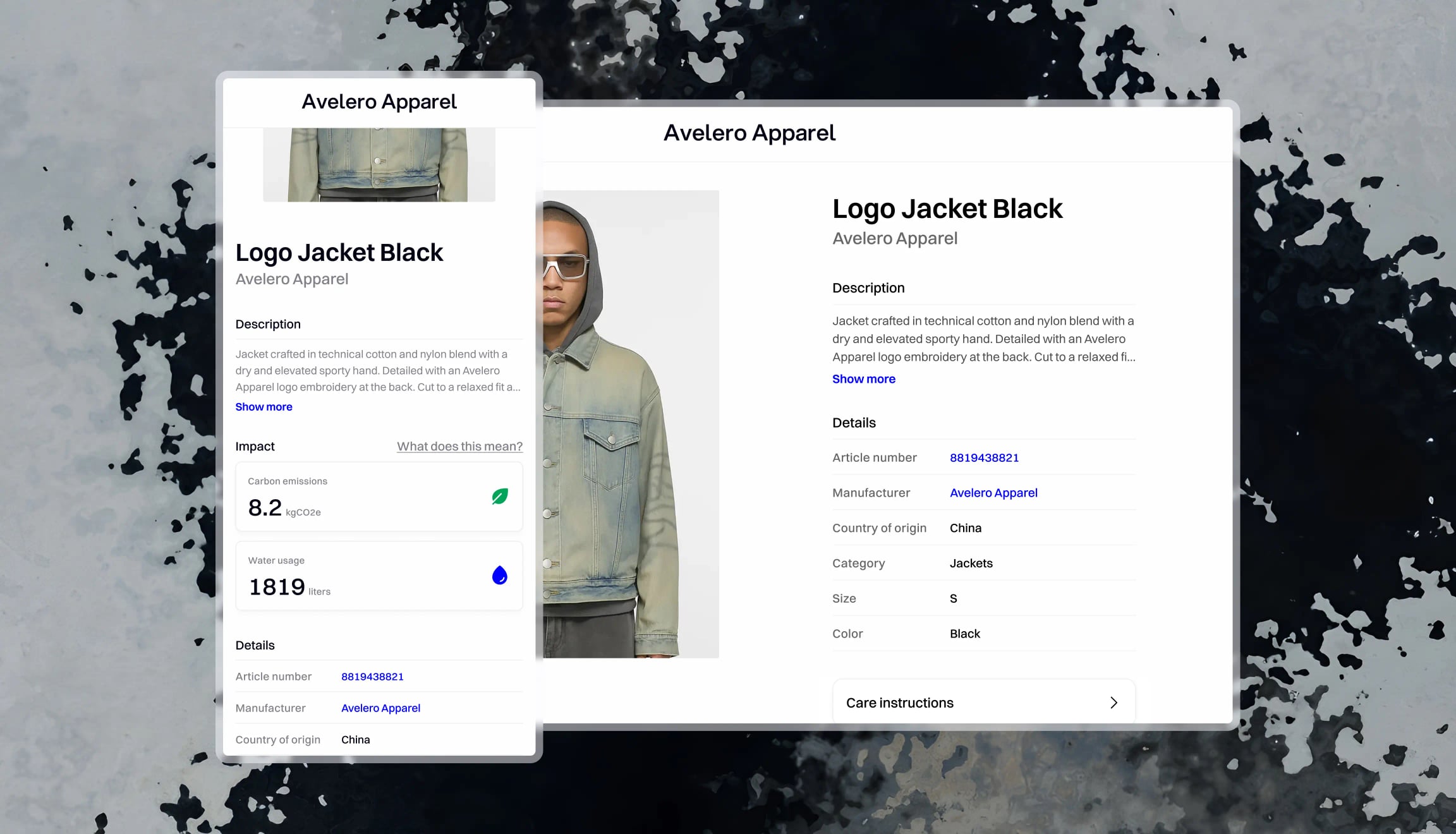
A practical explanation of the EU's Digital Product Passport: what it is, what data it requires, who it applies to, and what it means for fashion brands.

What the GS1 Digital Link means for your product passport
Learn what the GS1 Digital Link standard means for your fashion brand's Digital Product Passport. How the URL structure works, why EU ESPR compliance relies on it, and how it connects QR codes to product data.