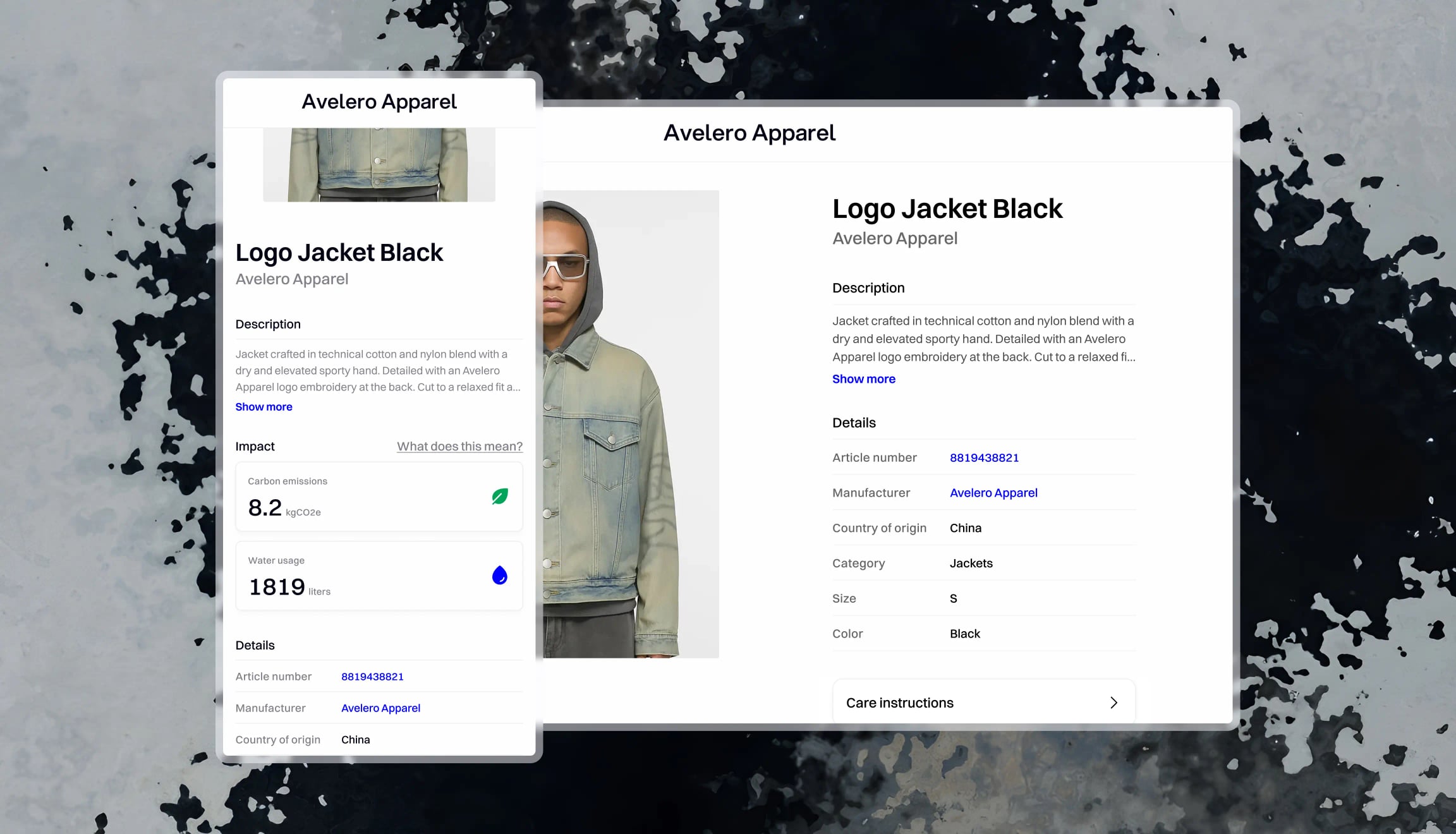
What data does the digital product passport require?

The European Union's Digital Product Passport is coming for textiles, and one of the most common questions we hear from brands is simply: what data do I actually need? The answer isn't as straightforward as you'd hope, because the textile-specific requirements haven't been finalized yet. But the regulatory framework already tells us a lot about what to expect. Here's what we know so far.
In short: The Digital Product Passport (DPP) is a digital record attached to a product that will contain information about its materials, production, environmental impact, and end-of-life handling. It applies to fashion brands selling or importing textile products into the EU, regardless of where the brand is based. The ESPR framework is already law. The textile-specific delegated act is expected in 2027, with compliance required roughly 18 months after that.
Where the requirements come from#
The DPP is part of the Ecodesign for Sustainable Products Regulation (ESPR), which entered into force on 18 July 2024. The ESPR is framework legislation, meaning it sets the general rules and then delegates the product-specific details to separate legal instruments called delegated acts. For textiles, the delegated act is expected to be adopted around 2027, with brands getting at least 18 months after that to comply.
The ESPR itself already outlines the broad categories of information a DPP should contain. According to the European Commission, this includes a product's technical performance, materials and their origins, repair activities, recycling capabilities, and lifecycle environmental impacts. These are the starting points. The delegated act for textiles will translate these into specific, enforceable data fields. But the direction is clear enough to start preparing.
Who does this apply to?#
The DPP is expected to apply to fashion brands that sell or import textile products into the EU market. This includes clothing, accessories, and home textiles, whether your brand is based in Europe or elsewhere. If you place textile products on the EU market, you'll likely need to provide a DPP.
As of now, the EU has not published specific exemptions for smaller brands. It's possible the delegated act could introduce tiered requirements based on company size, similar to how the ESPR's ban on the destruction of unsold goods currently exempts micro and small enterprises and delays obligations for medium-sized ones. But until the delegated act is published, the safest assumption is that this will apply broadly.
The expected data requirements#
Based on the ESPR framework and the preparatory work being done around the textile delegated act, here's what the DPP for textiles is expected to require:
- Product identification (name, type, color, size, unique identifier)
- Manufacturer and importer details
- Material composition and percentages
- Material origins
- Production journey and supply chain traceability
- Substances of concern
- Durability metrics
- Repairability information
- Care instructions
- Lifecycle environmental impacts (carbon footprint, water consumption)
- Recycled and bio-based content
- Recyclability per material
- Certifications and compliance documentation
Let's walk through what each of these means in practice.
Product identification covers standard product information like name, type, color, and size, along with a unique product identifier such as a GTIN or EAN code provided through GS1 standards. The DPP will need to be accessible through a data carrier, most likely a QR code on the product's care label. Manufacturer and importer details will also be required so it's clear who is responsible for placing the product on the EU market.
Material composition and percentages means disclosing which materials the product is made of, with a breakdown per material (for example, 95% organic cotton, 5% elastane). Material origins goes a step further, requiring information about where those materials come from geographically.
Production journey and supply chain traceability covers the processing steps from raw material to finished product across multiple tiers, potentially from tier 1 (assembly) all the way to tier 4 (raw material extraction), including where key steps like spinning, dyeing, finishing, and cutting took place. This is one of the more demanding requirements because it depends on data from suppliers who may not be used to sharing it at this level of detail.
Substances of concern requires disclosure of chemicals, dyes, and finishing treatments used in production, aligned with existing EU chemicals legislation like REACH. This is about ensuring products are safe and that recyclers know what they're dealing with at end of life.
Durability metrics could include expected product lifespan, fabric strength (tear and tensile), color fastness, and the durability of components like zippers and buttons. Repairability information covers things like repair guides, disassembly instructions, and spare part availability. Care instructions, covering how to wash, dry, and store the product, fit naturally here as well since proper care directly extends product life.
Lifecycle environmental impacts like a product's carbon footprint and water consumption are expected to be required, likely calculated using the Product Environmental Footprint (PEF) methodology. Recycled and bio-based content will need to be reported as a percentage, with early signals suggesting the EU will emphasize textile-to-textile recycled content specifically. Recyclability needs to be indicated per material, including sorting data that helps recyclers process the product at end of life.
Certifications and compliance documentation includes material-level certifications like the Recycled Wool Standard or GOTS, declarations of conformity, and relevant test reports.
It's worth noting that these are expected requirements. The final data fields will be defined in the textile delegated act, which hasn't been published yet. But the categories above are directly derived from what the ESPR has outlined, and the preparatory studies informing the delegated act are working within this scope.
Where this data comes from and when to start#
Most brands already have pieces of this data, but it rarely lives in one place. Material compositions sit in your PLM system. Supplier information is in your ERP or scattered across spreadsheets. Certifications are PDF files in someone's inbox. Environmental impact data, if you have it at all, might come from a separate LCA tool.
The challenge isn't that the data doesn't exist. It's that it needs to be structured, connected, and kept up to date in a format that a Digital Product Passport can actually use. That takes time to set up, especially when it involves getting suppliers on board with sharing production and traceability data.
The products being designed and sourced right now will enter the market around the time DPP obligations are expected to apply. Starting to collect and organize this data now isn't about panic, it's just practical timing.
Some of this data is easier to get than others. Material compositions and certifications are usually within reach. Supply chain traceability takes more coordination. And lifecycle environmental impacts, like carbon footprint and water scarcity, often require dedicated tooling to calculate at the product level. At Avelero, we've built an LCA prediction engine into our platform that can calculate these values for your products automatically, so that's one less thing to figure out on your own.
But regardless of the tools you use, the important thing is to start mapping what you have, identify the gaps, and work toward filling them. The regulation isn't a surprise. The direction is clear. And the brands that treat this as an opportunity to get their data in order, rather than a last-minute scramble, will be the ones that are ready when the delegated act drops.
If you want to get ahead of it, we're happy to help.